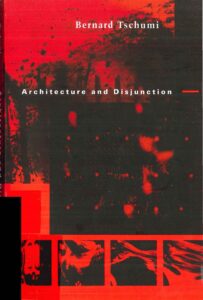
Avant-garde theorist and architect Bernard Tschumi is equally well known for his writing and his practice. Architecture and Disjunction, which brings together Tschumi’s essays from 1975 to 1990, is a lucid and provocative analysis of many of the key issues that have engaged architectural discourse over the past two decades—from deconstructive theory to recent concerns with the notions of event and program. The essays develop different themes in contemporary theory as they relate to the actual making of architecture, attempting to realign the discipline with a new world culture characterized by both discontinuity and heterogeneity. Included are a number of seminal essays that incited broad attention when they first appeared in magazines and journals, as well as more recent and topical texts.
Tschumi opposes modernist ideology and postmodern nostalgia since both impose restrictive criteria on what may be deemed “legitimate” cultural conditions. He argues for focusing on our immediate cultural situation, which is distinguished by a new postindustrial “unhomeliness” reflected in the ad hoc erection of buildings with multipurpose programs. The condition of New York and the chaos of Tokyo are thus perceived as legitimate urban forms.
Download
Tschumi_Architecture and Disjunction.pdf
Tschumi_Architecture and Disjunction.txt