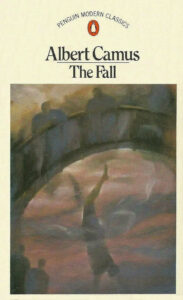
Jean-Baptiste Clamence is a soul in turmoil. Over several drunken nights in an Amsterdam bar, he regales a chance acquaintance with his story. From this successful former lawyer and seemingly model citizen a compelling, self-loathing catalogue of guilt, hypocrisy and alienation pours forth.
The Fall (French: La Chute) is a philosophical novel by Albert Camus. First published in 1956, it is his last complete work of fiction. The Fall explores themes of innocence, imprisonment, non-existence, and truth. In a eulogy to Albert Camus, existentialist philosopher Jean-Paul Sartre described the novel as “perhaps the most beautiful and the least understood” of Camus’ books.
Download